Ipon Challenge Ideas That Actually Work (Pick One and Start Today)
The 52-week challenge isn't the only way. Seven ipon challenges for different incomes and personalities, with realistic totals and tips to actually finish.
 By the Iponista team · July 16, 2026 · 6 min read

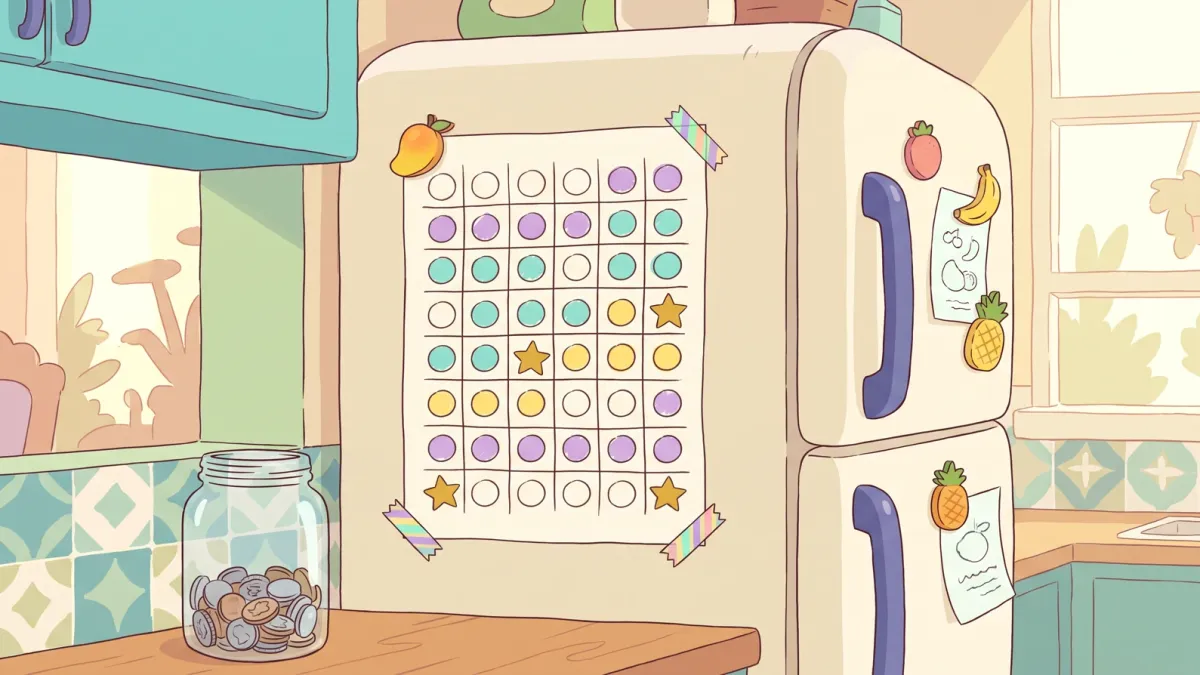
Every January the timeline fills up with the same photo: a printed chart, a new alkansya, and the caption "this is my year." By March, half of those charts are behind the ref magnets, untouched. If you've been there, don't worry. An ipon challenge works best when it matches your income and your personality, and the famous 52-week version isn't right for everyone.
Below are seven ideas, from tiny to serious, with what each one realistically saves. Pick one, not three.
Why an ipon challenge works when "just save" doesn't
"I'll save more this year" is a wish. A challenge turns it into a small, specific action with a finish line. You know exactly what to do this week, you can see progress, and every filled box on the chart gives a little hit of satisfaction.
There's also the social side. Doing it with your partner, your barkada or your officemates adds friendly pressure. Nobody wants to be the one who dropped out first.
1. The classic 52-week ipon challenge
You save ₱10 in week one, ₱20 in week two, and so on, up to ₱520 in week 52. The total is ₱13,780.
It starts easy, which builds confidence. The catch is December: the last weeks ask for ₱500+ right when Christmas spending peaks. A popular fix is the reverse 52-week: start with ₱520 in January when motivation is high, and end with ₱10 in December.
We break down both versions in our Academy lesson on the 52-week ipon challenge.
2. The ₱20 bill challenge
Every ₱20 bill that ends up in your wallet goes straight into the alkansya. No math, no chart. It's surprisingly effective for people who use cash daily, and totally random, which makes opening the jar fun.
It works less well if you mostly pay with GCash or Maya. For you, the next one fits better.
3. The kinsenas percentage challenge
Every payday, save a percentage instead of a fixed amount. Start at 5%. Each month, raise it by 1%. By December you're saving 16% without ever feeling a big jump.
This is the best challenge for people with irregular income, like freelancers or commission-based workers, because it adjusts automatically to what you earn. If that's you, read our guide to budgeting on irregular income too.
4. The no-spend day challenge
Pick two days a week where you spend nothing beyond fixed bills and pamasahe. Bring baon, skip the milk tea, stay in. Whatever you would normally spend on those days goes to savings.
Say an ordinary day costs you ₱300 in food and small buys, and a no-spend day costs ₱80 for fare. Two no-spend days a week can free up around ₱1,800 a month, depending on your habits. For a lighter version, our daily baon budget guide has ideas that don't feel like punishment.
5. The "ipon the difference" challenge
Every time you choose a cheaper option, save the difference. Coffee at home instead of a ₱180 café drink? Put ₱150 in the jar. Took the jeep instead of a Grab? Save what the ride would have cost.
This one teaches the most, because it connects every small choice to a visible result.
6. The round-up challenge
Whenever you log an expense, round it up to the next ₱50 or ₱100 and save the difference. A ₱237 grocery run becomes ₱250, and ₱13 goes to ipon. It's painless and adds up quietly.
7. The barkada ipon challenge
Pick a shared goal, like a trip or a Christmas party, and a deadline. Everyone saves their share on their own, and you check in every payday. Nobody holds anyone else's money, which avoids the awkwardness of chasing late payers.

Which ipon challenge fits you?
If you're unsure where to start, match the challenge to how you live:
| If you... | Try |
|---|---|
| Mostly pay in cash | The ₱20 bill challenge |
| Get a fixed kinsenas salary | The classic or reverse 52-week |
| Have irregular income | The kinsenas percentage challenge |
| Overspend on small daily buys | No-spend days or "ipon the difference" |
| Log every expense already | The round-up challenge |
| Need a push from friends | The barkada challenge |
You can also stack two small ones, like round-ups plus one no-spend day a week. Just don't start with four at once. The goal is to still be doing it in October.
An ipon challenge for kids and teens
Challenges are a great way to teach younger family members about money, as long as the amounts fit their baon. A few ideas that work at home:
- Coin-a-day: every day they bring home any leftover coins from baon, they drop them in their own alkansya.
- Matching: for every ₱20 they save, a parent or tita adds ₱5. It teaches that saving earns something, the same idea as interest.
- Goal jar: pick something they actually want, draw it on the jar, and let them count the coins every Sunday.
Kids learn more from watching than from lectures. If they see you doing your own challenge, the habit sticks faster for everyone.
How to actually finish your ipon challenge
Most challenges fail in the same places: a heavy month, a surprise expense or simple boredom. Around week eight the novelty wears off, and the chart on the fridge starts to feel like homework. That's normal, and it's exactly when small systems matter more than motivation. A few things help:
- Automate what you can. Move the amount right after your sahod arrives, before you spend.
- Keep it separate. Coins in an alkansya you can't easily open; bigger amounts in a savings account that isn't your spending wallet. If it's a bank, check that it's covered by the Philippine Deposit Insurance Corporation.
- Plan for December. Christmas, 13th month and ninong duties all collide. A sinking fund for Pasko keeps the challenge from being raided.
- Missed a week? Keep going. Skip it or save the smallest remaining amount. Consistency beats perfection.
What to do with the money when you finish
Decide now, so it doesn't vanish into a random online sale. Good options:
- Start or top up your emergency fund. See the emergency fund lesson for how much you need.
- Pay down high-interest utang. Clearing a credit card balance is often worth more than any savings interest.
- Fund a goal you named at the start. A trip, a laptop for work, a course. Spending ipon on a goal you planned for months is not failure; it's the whole point, and it feels completely different from an impulse buy.
- Grow it. If your emergency fund is complete, look into options like Pag-IBIG MP2 and read the current terms on the Pag-IBIG Fund site.
Track your challenge without a paper chart
Paper charts are great until the ref gets rearranged. In Iponista you can create a savings goal with a target and a date, and a progress ring fills up every time you add to it. Ponpon cheers you on for streaks, and you can see how far you are from the finish at a glance.
Pick one challenge from this list, start this payday, and track it free in Iponista. For more small habits that make saving easier, see our ipon tips for new iponistas.
This article is for education and general guidance, not personal financial advice.
Frequently asked questions
Which ipon challenge saves the most?
The one you finish. On paper, challenges with bigger weekly amounts save more, but a smaller challenge you complete beats a bigger one you drop in February.
Where should I keep the money from an ipon challenge?
A physical alkansya works for coins, but for larger amounts a separate savings account is safer and less tempting. Keep it apart from the wallet you spend from.
What if I miss a week?
Skip it and continue with the next one, or pick the smallest remaining amount that week. The goal is momentum, not perfection.
Can I do an ipon challenge with irregular income?
Yes. Percentage-based challenges, like saving 10% of every payment, fit irregular income better than fixed weekly amounts.