Freelancer Budget: How to Handle Irregular Income in the Philippines
Some months you're rich, some months you're checking GCash every hour. How Filipino freelancers can turn an irregular income into a steady, livable budget.
 By the Iponista team · July 11, 2026 · 5 min read
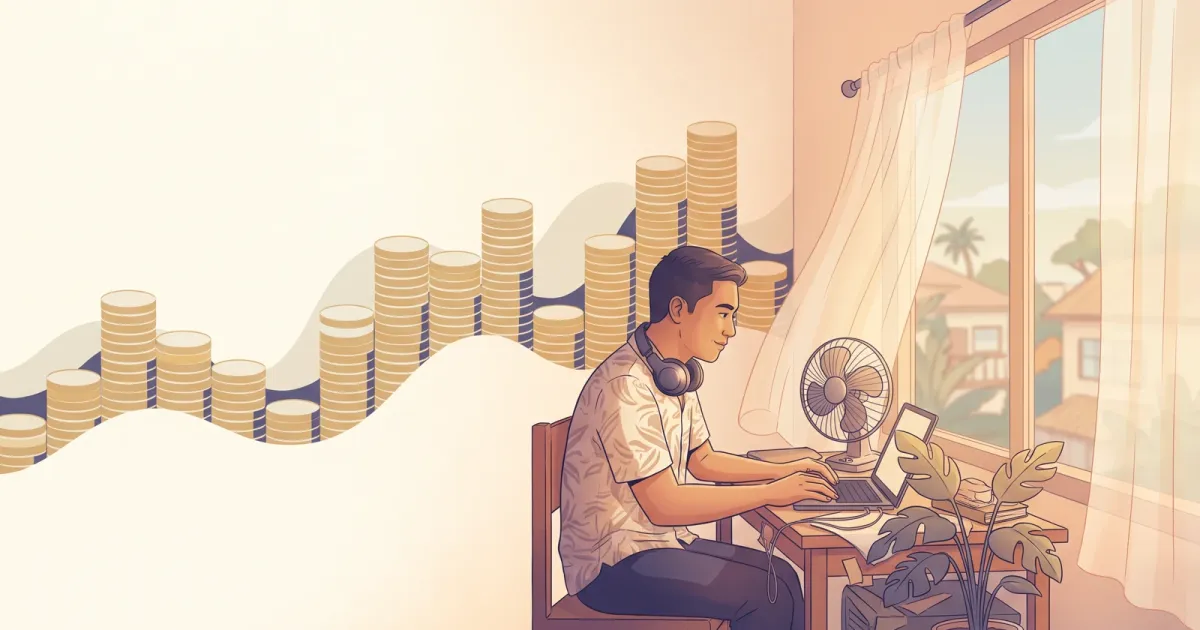
Freelancing in the Philippines has real perks: working from home, choosing clients, no three-hour commute. But anyone who's done it knows the other side. One month a big project pays out and you feel rich. The next month a client delays payment, and you're refreshing your inbox and GCash every hour. Budgeting with an irregular income feels impossible, because most budget advice assumes the same sahod every 15th and 30th.
The good news: you can build that steadiness yourself. The core idea is simple. Stop living on your income. Live on a salary you pay yourself.
Why irregular income breaks normal budgets
A normal budget says "I earn ₱30,000, so I'll spend ₱25,000 and save ₱5,000." When you earn ₱55,000 one month and ₱12,000 the next, that plan collapses.
What usually happens is this: in good months, spending rises to match. A new gadget, eating out more, a trip. In slow months, there's no cushion, so bills go on a credit card or get delayed. Over a year, you may earn well and still feel broke. The problem isn't the total. It's the timing.
Step 1: Find your baseline month
Look at the last six to twelve months of income. Find your lowest normal month, not a freak disaster month, but a slow-but-typical one. That's your baseline.
Next, list your essential monthly costs: rent, utilities, internet (your work depends on it), food, transport, family support, insurance and debt payments. If your essentials are higher than your baseline income, that's the first thing to work on, either by trimming costs or finding steadier clients.
Step 2: Create a holding account and pay yourself a salary
This is the system that changes everything:
- All client payments go into one holding account. PayPal, Wise, bank transfers, GCash from local clients: they all end up here first.
- Once a month (or per kinsenas), pay yourself a fixed salary from the holding account to your spending account. Set it at or slightly below your baseline.
- Good months stay in the holding account. They're not bonus money; they're next month's salary insurance.

After a few months, your holding account builds a buffer. When a slow month comes, your "salary" still arrives on time, paid from the buffer. You've turned an irregular income into a regular one.
Step 3: Set aside tax and contributions first
Employees have tax and contributions taken out automatically. Freelancers don't, which makes it easy to forget until a deadline arrives.
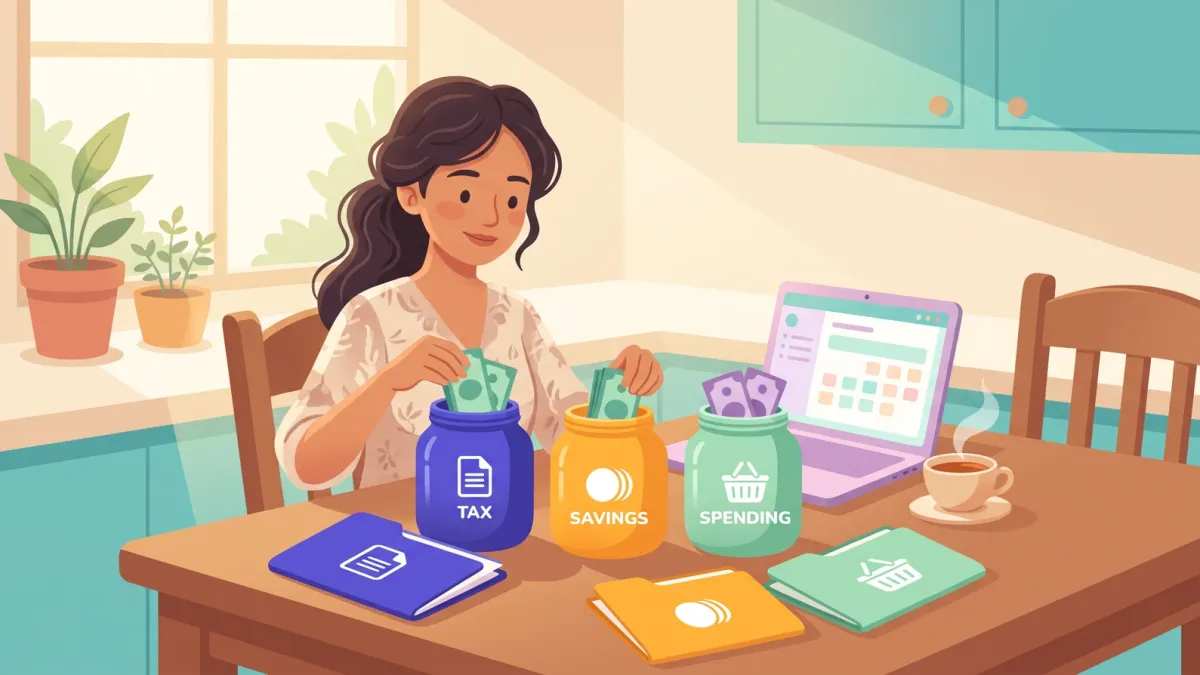
When a payment lands, move a percentage straight into a separate "tax and benefits" pocket before anything else. How much depends on your income and the tax option you choose. The Bureau of Internal Revenue publishes the current rules for self-employed individuals and professionals, and our income tax calculator can help you estimate. When in doubt, ask a tax professional; rules change.
For social benefits, you can contribute to the SSS as a self-employed or voluntary member, and to Pag-IBIG on your own. These keep your sickness, maternity, loan and retirement benefits intact without an employer.
Step 4: Save a percentage, not a fixed amount
Fixed savings goals don't fit variable income. Saving ₱5,000 a month is easy in a ₱60,000 month and impossible in a ₱15,000 one. Instead, save a percentage of every payment that comes in, like 10% or 15%. Big months save more automatically, and small months don't break you.
This is the same idea as the kinsenas percentage challenge in our ipon challenge ideas, and it's the most sustainable way to save on irregular income.
Step 5: Build two cushions, not one
Freelancers need two separate safety nets:
- The income buffer in your holding account, which smooths out slow months. Aim for at least one month of your salary, and build toward three.
- The emergency fund, for true emergencies like illness, a broken laptop or a family crisis. Keep it separate from the buffer. Our emergency fund lesson explains how big it should be.
It's also smart to keep a sinking fund for equipment. Your laptop and internet are your office. Replacing them shouldn't be an emergency.
Step 6: Plan for the long term yourself
No employer means no company retirement plan and no 13th month pay unless you create them. A simple fix: treat part of your good months as your own 13th month and retirement contribution. Our Academy lesson on retirement planning in the Philippines covers the options.
When clients pay late
Late payments are one of the hardest parts of freelancing, because your bills don't wait. A few habits reduce the damage:
- Put payment terms in writing before you start: the amount, the due date and what happens if it's late.
- Ask for a deposit on bigger projects. A percentage upfront protects you if the client disappears halfway.
- Invoice promptly and follow up kindly. A friendly reminder a day after the due date is professional, not rude.
- Don't count money until it's in your account. Plan your budget from received payments, not promised ones.
Your income buffer is what makes all this bearable. When a client is two weeks late, the buffer pays your salary while you follow up.
Watch the fees and exchange rates
If you're paid in dollars or through international platforms, a chunk of your income can disappear into fees and conversion. Compare what you actually receive in pesos across the options you have, like platform withdrawals, e-wallets and bank transfers, and time conversions sensibly instead of in a rush. Small percentage differences add up over a year of payments.
A sample irregular income budget
Here's an illustration for a virtual assistant whose income ranges from ₱25,000 to ₱60,000 a month, with a baseline of ₱28,000:
| Step | Amount |
|---|---|
| Client payment this month | ₱52,000 |
| Tax and benefits pocket (example 12%) | ₱6,240 |
| Savings (10%) | ₱5,200 |
| Salary paid to spending account | ₱26,000 |
| Stays in holding account as buffer | ₱14,560 |
Next month, if only ₱18,000 comes in, the salary is still ₱26,000, topped up from the buffer. The percentages here are examples; set your own based on your tax situation and goals.
Review every quarter
Freelance income changes over time, and your system should too. Every three months, take half an hour to check:
- Is your baseline still accurate, or has your typical month grown?
- Is the buffer at least one month of salary? If it's well above three, consider raising your salary a little.
- Did you set aside enough for tax and contributions?
Make the system easy to follow
The system only works if you can see it. Track the holding account, the tax pocket and your spending wallets in one place. In Iponista, you can add each account as its own wallet, log transfers between them in seconds, and see your whole picture, including the buffer, on one screen. The cash-flow forecast shows early if a slow month is heading your way.
Freelancing will always have ups and downs. Your budget doesn't have to. Set up your freelancer wallets in Iponista and start paying yourself a salary this month.
This article is for education and general guidance, not personal financial or tax advice.
Frequently asked questions
How do I budget with irregular income?
Budget from your lowest normal month, not your best one. Keep incoming payments in a holding account, pay yourself a fixed monthly salary from it, and let good months refill the buffer for slow ones.
How big should a freelancer's buffer be?
Aim for at least one month of expenses in the holding account on top of a separate emergency fund. Many freelancers work toward three months as income becomes more variable.
Do freelancers in the Philippines need to pay tax?
Generally, yes. Self-employed individuals and professionals have registration and filing obligations with the BIR. Rules and rate options change, so check the BIR's current guidance or ask a tax professional.
Can freelancers still get SSS and Pag-IBIG?
Yes. Self-employed and voluntary members can contribute on their own. It keeps benefits like sickness, maternity, loans and retirement available even without an employer.


