Digital Sobre: Envelope Budgeting With GCash, Maya and Your Bank
Our lolas budgeted with labeled envelopes, and it worked. Here's how to run the same sobre system with e-wallet pockets and bank accounts, without the chaos.
 By the Iponista team · September 11, 2026 · 5 min read


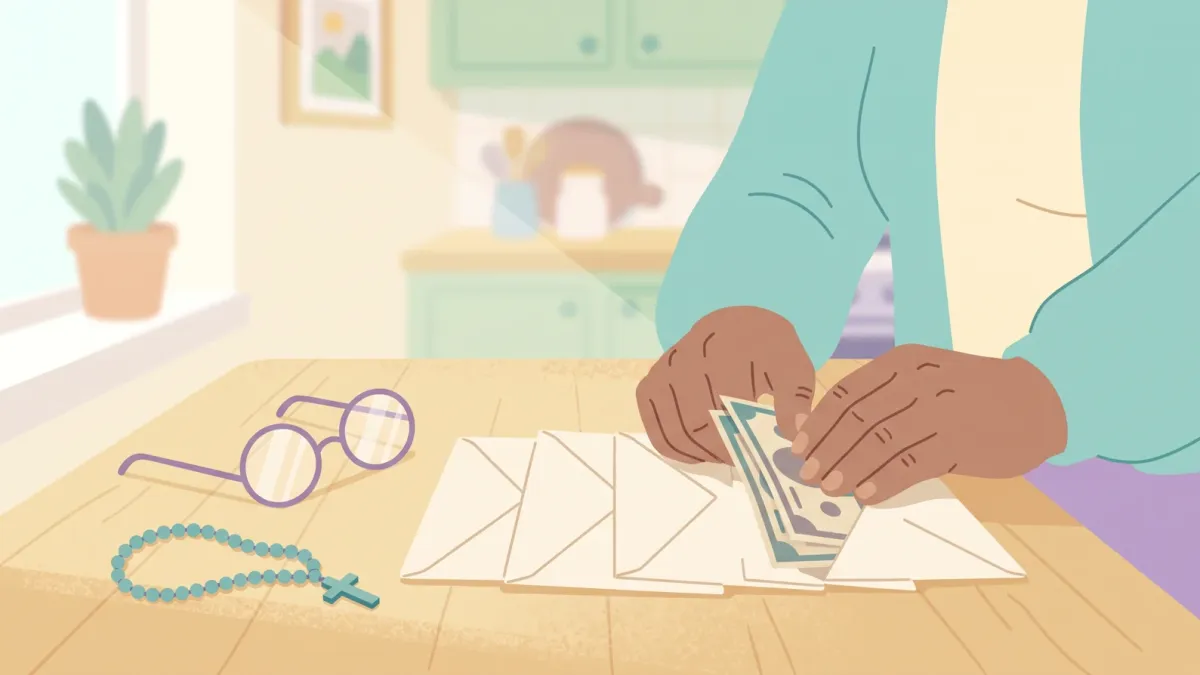
Ask your lola how she kept the household running, and there's a good chance she'll describe a stack of envelopes. One for kuryente, one for tubig, one for the palengke, one for tuition, maybe one hidden somewhere for emergencies. When an envelope was empty, that category was done until the next sweldo. That's envelope budgeting, and it still works. The only difference now is that most of our money lives in GCash, Maya and bank apps instead of a drawer.
This guide shows how to run the same sobre system digitally, what to watch out for, and how to keep it simple enough that you'll actually stick with it.
Why envelope budgeting works so well
Most budgets fail because money is one big pool. You see ₱6,000 in your account and it all feels spendable, even though ₱2,500 of it belongs to next week's bills. The envelope method gives every peso a job the day it arrives, and makes those jobs visible.
It also changes how overspending feels. Instead of a vague sense that "money is tight," you see exactly which envelope ran out. Food empty by the 22nd? That's specific, and specific problems are fixable.
And it's forgiving. You don't need to track every centavo. You just need to know which envelope a purchase comes from.
The classic sobre method, step by step
Before going digital, here's the original version in five steps:
- List your envelopes. Bills, food, transport, personal, family, savings.
- Fill them on payday. Split your sahod into each envelope, starting with bills and savings.
- Spend only from the right envelope. Groceries come from Food, pamasahe from Transport.
- When it's empty, it's empty. Either wait for payday or consciously move money from another envelope.
- Review at the end of each cutoff. What ran out? What had leftovers? Adjust next time.
Envelope budgeting with GCash, Maya and digital banks
Cash envelopes don't work when you pay for most things by QR code. The digital version keeps the same idea but uses separate places for separate jobs. There are three common ways to set it up.
Option 1: Separate accounts as envelopes
Use different accounts for different purposes. For example:
- Payroll account: receives the sahod, pays the big bills.
- GCash: daily spending, food, transport.
- Maya or a digital bank savings account: ipon, untouched.
- Another pocket or account: sinking funds for yearly costs.
This works because the physical separation stops you from "accidentally" spending the rent. The downside is juggling several apps and transfer fees between them, so check the charges before moving money around often.
Option 2: Pockets inside one app
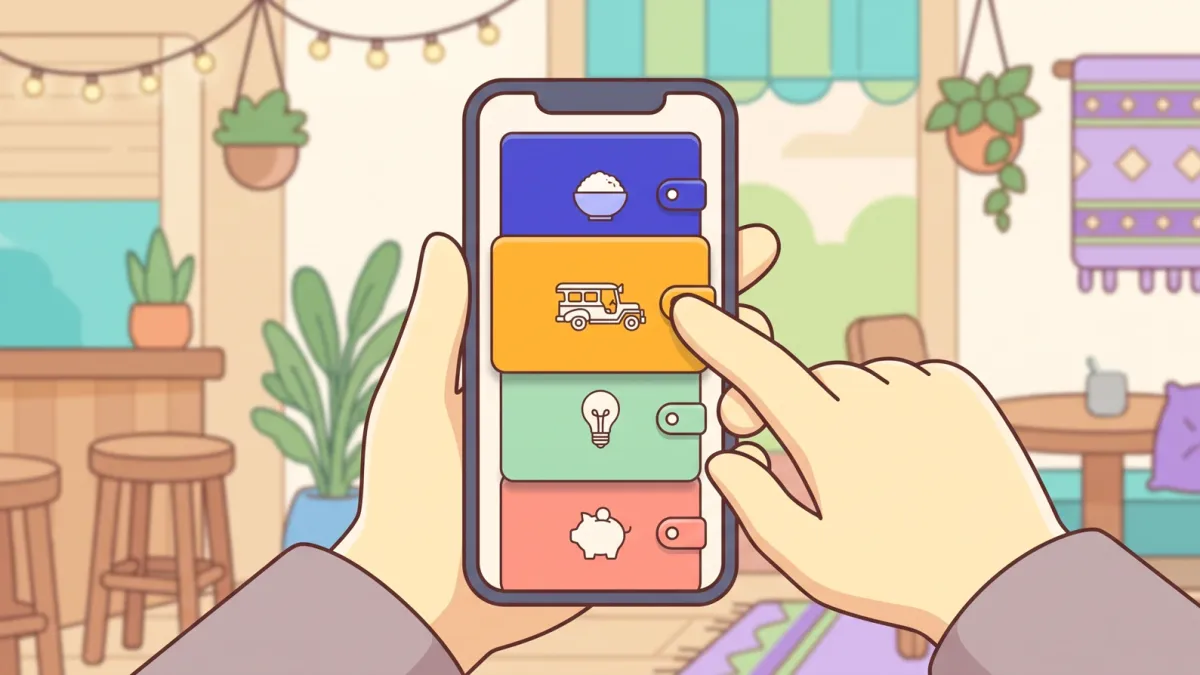
Several e-wallets and digital banks let you create savings pockets or sub-accounts within one app. Each pocket becomes an envelope with its own name and goal. It's tidier than juggling apps, and moving money between pockets is usually free and instant. Just remember that pockets in the same app are still one tap away from each other, so the discipline is on you.
Option 3: Virtual envelopes in a budget app
Keep the money wherever it already is, but track envelopes in a budget app. This is the most flexible option. You set a budget per category per kinsenas, log spending as it happens, and the app shows how much is left in each "envelope." In Iponista, a quick line like "palengke 640 cash" logs the spend and updates your Food budget right away, so you can see what's left before the next market run.
Setting up your envelopes: a sample kinsenas
Here's an example for someone taking home ₱11,000 per payday. Treat it as a starting point, not a rule:
| Envelope | Amount | Where it lives |
|---|---|---|
| Bills (this cutoff) | ₱3,200 | Payroll account |
| Food and groceries | ₱3,000 | GCash |
| Transport | ₱1,200 | GCash |
| Family / padala | ₱1,500 | Sent on payday |
| Personal and fun | ₱1,000 | GCash |
| Ipon | ₱1,100 | Separate savings |
The totals match the pay exactly. That's the point of envelope budgeting: every peso has a job before the cutoff starts. If you're not sure how to size each envelope, the 50/30/20 budget calculator is a helpful first draft, and our kinsenas budgeting guide shows how to match bills to each payday.
Envelope budgeting for a whole household
If you manage money for a family, envelopes are even more useful, because several people spend from the same income. A few adjustments help:
- Give each regular spender their own envelope. A set weekly amount for the person who does the palengke, allowance envelopes for kids, a transport envelope for whoever commutes. Everyone knows their limit without constant asking.
- Keep one "household bills" envelope that only one person touches. Usually the person who pays the bills. This prevents two people paying the same Meralco bill, or nobody paying it.
- Hold a quick family check-in on payday. Five minutes to say what each envelope gets this cutoff and what's coming up, like a school project or a birthday.
For kids and teens, a small allowance envelope is one of the best money lessons there is. When their envelope is empty, they learn to wait, and that lesson is worth more than the amount inside.
Common envelope budgeting mistakes
The method is simple, but a few mistakes trip people up:
- Too many envelopes. Fifteen categories sounds organized and becomes a chore by week two. Start with five or six.
- No envelope for irregular costs. Birthdays, school projects, car registration. Without a place for them, they raid the Food envelope. A sinking fund solves this.
- No fun envelope. A budget with zero room for enjoyment fails. A small personal envelope you can spend guilt-free makes the rest sustainable.
- Moving money silently. It's fine to move money between envelopes, but do it on purpose and note why. Silent moves hide the real problem.
Keeping digital envelopes safe
When your envelopes live in apps, security matters more than it did with a drawer. A few basics:
- Turn on app locks and use a different PIN for each money app.
- Never share one-time PINs. Legitimate banks and e-wallets don't ask for them, which the Bangko Sentral ng Pilipinas stresses in its consumer advisories.
- Be careful with links in texts or chats claiming your account is "locked." Our lesson on GCash, Maya and bank scams shows the common tricks.
- For bank savings envelopes, check that the bank is a deposit insurance member through the Philippine Deposit Insurance Corporation.
Is envelope budgeting right for you?
It's a great fit if you overspend without noticing, if you like clear limits, or if you manage household money for several people. It's less ideal if your income swings a lot from month to month, though a percentage-based version can still work.
The best part is that you don't need to go all in. Start with just two envelopes this payday: one for ipon and one for everything else. Next cutoff, split "everything else" into bills and daily spending. Build it up slowly, the way Lola probably did.
When you want the envelopes to count themselves, set up kinsenas budgets in Iponista and let it show what's left in each one as you spend.
This article is for education and general guidance, not personal financial advice.
Frequently asked questions
What is envelope budgeting?
It's a method where you split your income into separate 'envelopes' for each spending purpose, like food, bills and savings. When an envelope is empty, spending in that category stops until the next payday.
Can I do envelope budgeting with GCash or Maya?
Yes. Use separate savings pockets, sub-wallets or digital bank accounts as envelopes, or track virtual envelopes in a budget app while the money stays in one account.
How many envelopes should I have?
Start with four to six: bills, food, transport, personal spending, savings and family. More than that becomes hard to maintain.
What happens if one envelope runs out early?
Move money from a less important envelope and note why. If the same envelope keeps running out, the budget for it was unrealistic, so adjust it next payday.