The 50/30/20 Rule in the Philippines: Does It Work on a Filipino Sahod?
Half for needs, 30% for wants, 20% for savings. Simple on paper, but does it survive Philippine rent, padala and kinsenas pay? An honest look, with versions that do.
 By the Iponista team · July 29, 2026 · 5 min read
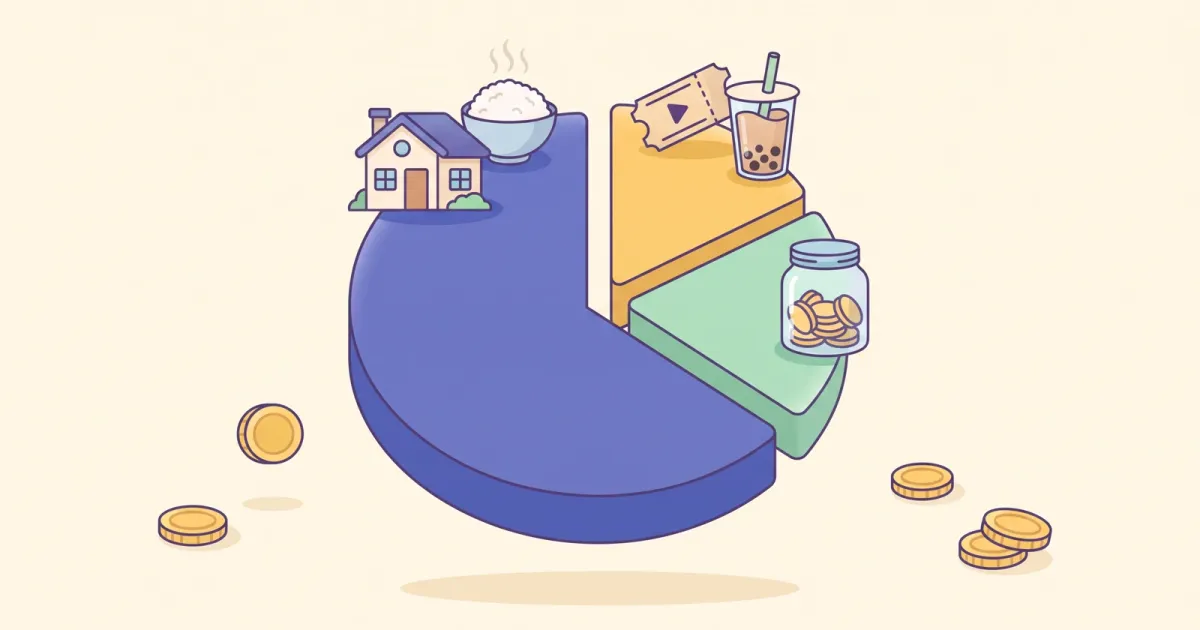
Search "how to budget," and the 50/30/20 rule shows up everywhere. It's simple, easy to remember and gives you a starting point in seconds: 50% of your take-home pay for needs, 30% for wants, 20% for savings. But most of that advice was written for places where rent, food and family obligations look very different from ours. So does the 50/30/20 rule actually work on a Filipino sahod? The honest answer: yes, as a starting point, and only if you adjust it to your real life.
This guide explains how the rule works, how to apply it per kinsenas, what to do when needs take more than half, and a few versions that fit Philippine households better.
What the 50/30/20 rule means
The idea is to split your take-home pay (after tax and SSS, PhilHealth and Pag-IBIG deductions) into three buckets:
- 50% needs: rent or amortization, utilities, groceries, transport to work, basic health costs, minimum debt payments, insurance.
- 30% wants: eating out, shopping, subscriptions, hobbies, travel, upgrades.
- 20% savings and debt: emergency fund, savings goals, investments, and extra payments on debt beyond the minimum.
It's popular because it's easy. You don't need to track fifty categories; you just check whether each bucket is roughly in range. You can try it with your own numbers in our 50/30/20 budget calculator.
Applying the 50/30/20 rule per kinsenas
Most budget examples assume one monthly paycheck. If you're paid on the 15th and 30th, apply the split to each payday instead.
Say you take home ₱12,000 per kinsenas:
| Bucket | Share | Per payday |
|---|---|---|
| Needs | 50% | ₱6,000 |
| Wants | 30% | ₱3,600 |
| Savings and debt | 20% | ₱2,400 |
Then match your bills to the payday before their due dates. Our kinsenas budgeting guide walks through mapping bills to each cutoff, which matters because big bills rarely split evenly between paydays.

The problem: needs often take more than 50%
Here's where the rule meets Philippine reality. For many households, needs easily exceed half of take-home pay, especially:
- if you rent in a city;
- if you commute long distances;
- if you're supporting parents, siblings or a household of five;
- if food prices rose faster than your salary.
Surveys by the Philippine Statistics Authority on family income and spending show that food and housing take a large share of household budgets, particularly for lower- and middle-income families. So if your "needs" come out at 65%, you're not failing. You're normal.
The mistake is either forcing the 50% and feeling like a failure, or giving up on the rule completely. There's a better middle path.
Realistic versions of the 50/30/20 rule
Think of the percentages as dials, not laws. Common adjustments:
- 60/20/20: needs take a bit more, wants shrink, savings stay protected.
- 70/20/10: for tight seasons or big family responsibilities. Savings are smaller but still happen every payday.
- 50/20/30: if your needs are low (living at home, no rent), push savings higher while you can.
The one rule worth keeping in any version: savings never goes to zero. Even 5% keeps the habit alive and builds an emergency fund over time.
Needs vs wants: where people get stuck
The rule only works if you sort honestly. A few common gray areas:
- Phone plan: a basic plan is a need; the premium unlimited plan is partly a want.
- Food: groceries and baon are needs; delivery and café drinks are wants.
- Transport: fare to work is a need; Grab every day because you're late is mostly a want.
- Family support: committed essentials, like a parent's medicine, often belong in needs; optional extras belong in wants.
Our needs and wants test is a quick way to sort the tricky ones.

A real example: ₱25,000 take-home
Let's test the rule with an illustration. Say you take home ₱25,000 a month, living in a shared apartment in the city and helping your parents a little.
| Item | Monthly | Bucket |
|---|---|---|
| Rent share and utilities | ₱7,500 | Needs |
| Groceries and baon | ₱4,500 | Needs |
| Transport | ₱2,200 | Needs |
| Help for parents | ₱2,000 | Needs |
| Phone and internet | ₱1,000 | Needs |
| Eating out, shopping, fun | ₱4,300 | Wants |
| Savings and extra debt payments | ₱3,500 | Savings |
Needs come to ₱17,200, about 69%. Wants are about 17% and savings 14%. That's far from 50/30/20, and it's also a perfectly reasonable budget. The rule did its job anyway: it showed that savings is the smallest bucket and that the easiest way to raise it is trimming wants a little, or finding a cheaper phone plan and transport route over time.
How to use the rule as a monthly check-up
Once your budget is set, the 50/30/20 split becomes a quick health check. Every month:
- Add up what actually went to needs, wants and savings.
- Compare with your target split.
- If wants grew, look at which category, usually food delivery or shopping.
- If savings shrank, find out why before next payday.
Five minutes a month is enough to catch drift early.
What goes in the 20%
The savings bucket does a lot of work, so give it a clear order:
- A starter emergency fund, about one month of expenses.
- Extra payments on high-interest debt, especially credit cards.
- A bigger emergency fund, working toward three to six months.
- Goals and long-term savings: a home, education, retirement.
If you're employed, your SSS and Pag-IBIG contributions are already deducted before take-home pay, but they're part of your future security too. If your wage is near the minimum, the Department of Labor and Employment publishes the current regional wage orders, which help you see where your pay stands.
When the 50/30/20 rule isn't enough
The rule is a guide, not a full plan. It doesn't tell you when bills are due, whether you'll run short before payday, or where exactly your wants money is going. If you find yourself over budget every cutoff, add one more layer:
- Track spending for two weeks to see the real split.
- Set category budgets for the biggest leaks inside "wants."
- Use pockets or envelopes so each bucket lives separately. Our digital envelope budgeting guide shows how with GCash and Maya.
If you manage a whole household, our family budget guide covers how to adapt the split for several people.
Common 50/30/20 mistakes
- Using gross salary instead of take-home. Always start from what actually lands in your account.
- Hiding wants inside needs. A premium phone plan or daily delivery isn't a need just because you're used to it.
- Forgetting yearly costs. Insurance, school fees and Christmas belong in the plan, spread per payday.
- Treating the rule as a test you pass or fail. It's a compass, not a grade.
See your real split automatically
The easiest way to use the 50/30/20 rule is to see your actual percentages without doing math. In Iponista, your spending is grouped by category, so you can see at a glance how much went to bills, food, transport and fun this month, and set kinsenas budgets for each. Savings goals show how your 20% is growing.
Start with the classic split, adjust it honestly, and protect your savings dial. Try it in Iponista with your next sahod.
This article is for education and general guidance, not personal financial advice.
Frequently asked questions
What is the 50/30/20 rule?
It's a simple budget guideline: about 50% of your take-home pay for needs, 30% for wants, and 20% for savings and extra debt payments.
Does the 50/30/20 rule work in the Philippines?
It works as a starting point, but many Filipino households spend more than half on needs because of rent, food, transport and family support. Adjusted versions like 60/20/20 or 70/20/10 are common and still useful.
Is family support a need or a want?
It depends. Essential help, like a parent's medicine or a sibling's tuition you've committed to, often works best as a need. Optional gifts and extras fit better under wants.
Should the 20% go to savings or debt?
Both count. Build a small emergency fund first, then split the 20% between savings and paying down high-interest debt like credit cards.