Needs and Wants: A 10-Second Test Before Every Gastos
Is it a need or a want? Easy for rice, harder for a new phone. A quick test for everyday Filipino spending, the gray areas in between, and how to enjoy wants without guilt.
 By the Iponista team · July 2, 2026 · 6 min read
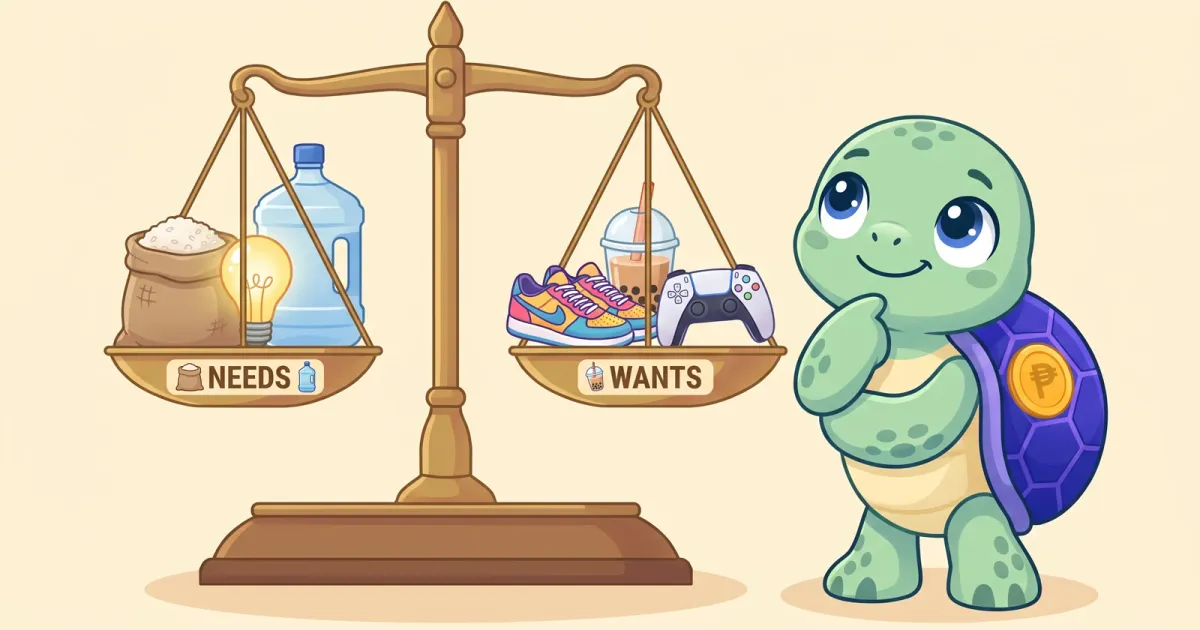
Rice is a need. A third pair of sneakers is a want. Easy. But what about a new phone when yours still works but the battery dies by lunch? Or Grab when you're late for work? Or a gym membership? Everyday spending is full of gray areas, and that's exactly where money quietly leaks. Knowing the difference between needs and wants isn't about living like a monk. It's about making sure your money goes to the things that really matter to you.
Here's a simple test you can do in about ten seconds, standing in the store or hovering over the "Place order" button.
Needs and wants, in plain words
Needs are the things you must have to live, work and stay safe:
- Food and clean water
- A place to live, and basic utilities like electricity and water
- Transport to work or school
- Basic health care and medicine
- Basic clothing
- A working phone and internet, if your job or school depends on them
- Minimum payments on existing debt
Wants make life nicer, more fun or more comfortable, but you'd be okay without them:
- Eating out and food delivery
- New gadgets when your current ones work
- Branded or premium versions of basic items
- Streaming, games and subscriptions
- Trips, concerts and hobbies
Here's the important part: wants aren't bad. They're often the reason we work hard. The goal is choosing them on purpose.
The 10-second needs and wants test
Before buying something, ask yourself three quick questions:
- "What happens if I don't buy this?" If the answer is "I can't work, eat or stay safe," it's a need. If it's "I'd be a bit disappointed," it's a want.
- "Is there a cheaper version that does the job?" A need can still be bought as a want. Rice is a need; the most expensive imported rice is partly a want.
- "Would I still want this in 48 hours?" If it's a want and you're not sure, wait two days. Most impulses fade.
That's it. It won't stop every impulse, but it turns autopilot spending into a small, conscious decision.

The gray areas (and how to decide)
Real life isn't neatly sorted. A few common gray areas:
Your phone. A working phone is a need for most Filipinos: work, GCash, family chats. Upgrading when yours still works is usually a want. Upgrading because it truly can't do your job anymore can be a need.
Grab and taxis. Getting to work is a need; the most comfortable way to get there is often a want. Late at night, when safety is a concern, a ride can shift into a need.
Eating out. Food is a need. A ₱90 carinderia meal on a busy day is close to a need. A ₱600 weekend dinner is a want, and a perfectly fine one if it's budgeted.
Family requests. Helping with a relative's hospital bill feels like a need. Helping fund a cousin's new phone may be a want. You're allowed to tell the difference.
When in doubt, ask whether the need is being met by the cheapest reasonable option. Anything above that is the "want" part of the purchase.
Why the line keeps moving
What counts as a need changes with your life. A laptop is a want for some people and a work tool for a freelancer. A car is a luxury in the city center and close to a need in some provinces. That's normal. The test isn't about universal rules; it's about being honest with yourself about your own life.
Watch out for one trap: as income rises, wants have a way of quietly becoming "needs." A nicer apartment, a better phone plan, delivery every night. That's called lifestyle inflation, and our guide on beating lifestyle inflation explains how to keep it in check.
Give your wants a budget
Here's the part most "stop spending" advice skips: wants need a place in your budget. A plan with zero room for fun usually ends in a big splurge. Instead, decide a guilt-free amount for wants every payday.
A popular starting point is the 50/30/20 rule: about 50% for needs, 30% for wants and 20% for savings and debt. It's not a law, and many Filipino families need more than 50% for needs. But it's a helpful first check. Try the 50/30/20 budget calculator with your real sahod to see what it looks like in pesos, and read how the 50/30/20 rule works in the Philippines.

Wants are allowed to change
One last thing worth saying: your wants will change as your life changes, and that's healthy. What felt essential at 22 might mean nothing at 30. Checking your list every few months keeps your spending aligned with who you are now, not who you were when you set it up.
Teaching needs and wants to kids
Kids can learn this surprisingly early, and it saves a lot of tantrums later. A few simple ways:
- Sort the grocery list together. Ask them which items the family needs and which are treats. Let them pick one treat within a set amount.
- Use their baon as practice. When they want something, ask the same question: "What happens if you don't buy it?" Then let them decide with their own money.
- Talk about your own choices out loud. "I want new shoes, but these still work, so I'll wait" teaches more than any lecture.
- Celebrate waiting. When they save up for something they wanted, make a big deal of it. Delayed rewards are a skill, and it grows with practice.
Children who learn needs and wants at home tend to handle their first salary much better, which is a gift you give them years in advance.
Protect your needs money
Needs deserve protection. A few habits help:
- Pay needs first on payday. Rent, bills, food budget and savings go out before any wants.
- Know fair prices for basics. The Department of Trade and Industry publishes suggested retail prices for basic necessities, which helps you spot overpricing.
- Be careful with online deals. Flash sales and "last chance" countdowns are designed to make wants feel urgent. If a deal looks too good, double-check the seller; the Bangko Sentral ng Pilipinas regularly warns about payment scams tied to fake online sellers.
Make it a habit, not a lecture
The needs and wants test works best when it becomes automatic. A simple way to build the habit is to look back at your spending once a week and label each purchase: need or want. No judgment, just awareness. Most people find a few wants they didn't even enjoy, and those are the easiest to cut.
Iponista makes this easy. Your spending is grouped by category, so you can see at a glance how much went to needs like bills and groceries versus wants like dining out and shopping. Set a kinsenas budget for your wants and Ponpon will let you know before you go over.
Pair this with our how to save money on a regular sahod guide and our kinsenas budgeting guide, then try it in Iponista. Spend on what you love, cut what you don't, and let the difference become ipon.
This article is for education and general guidance, not personal financial advice.
Frequently asked questions
What is the difference between needs and wants?
Needs are things you must have to live and work safely: food, shelter, basic utilities, transport to work, health care. Wants make life nicer but you could live without them, like upgrades, entertainment and luxury versions of needs.
Is a phone a need or a want?
A basic working phone is a need for most people, because work, banking and family depend on it. The latest model when your current phone works fine is usually a want.
Should I stop spending on wants completely?
No. A budget with zero room for wants tends to fail. Give wants a planned amount each payday and enjoy it without guilt.
How do I stop impulse buying online?
Remove saved cards from shopping apps, turn off sale notifications, and use a 48-hour wait rule for anything that isn't urgent. Most impulses fade within two days.


