Spot the Red Flags: How to Avoid Financial Scams in the Philippines
Double-your-money investments, loans that ask for a fee first, "like and earn" tasks and online love that ends in crypto. The red flags of the biggest money scams in the Philippines, and exactly what to do if you were scammed.
 By the Iponista team · October 15, 2026 · 5 min read
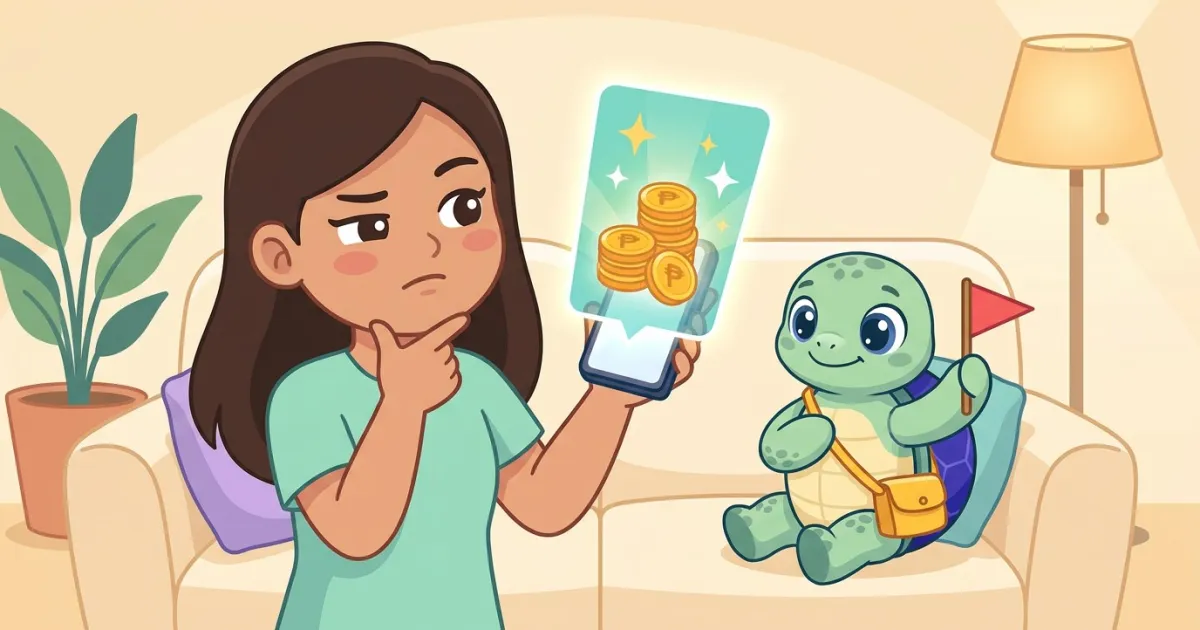

Every week someone loses their ipon to a message that looked real: a "sure" investment, a loan that only needed a small fee, a part-time job that paid at first. Scammers don't win because people are careless. They win because the offer is built to feel urgent, friendly and too good to miss.
This guide covers the money scams that cost Filipinos the most, the red flags they share, and the exact steps to take if it already happened. For phishing links, fake delivery texts and holiday shopping scams, read our separate guide on how to avoid online scams.
The five big money scams in the Philippines
| Scam | How it starts | The giveaway |
|---|---|---|
| Investment and Ponzi schemes | A friend, a page or a "mentor" shows proof of big payouts | Fixed high returns, like 10% a month, and bonuses for recruiting |
| Fake loan offers | "Approved agad, kahit walang payslip" | You must pay a processing or insurance fee before the loan is released |
| Task and "like and earn" jobs | A message offering ₱500 to ₱2,000 a day for liking videos or rating products | Small payouts first, then you must deposit to "unlock" bigger tasks |
| Love and friendship scams | A kind stranger online who becomes close fast | They never video call, then talk about a crypto app or an emergency |
| Money mule offers | "Pahiram lang ng account mo, may bayad" | Someone wants to send money through your bank or e-wallet |
Seven red flags that show up in almost every scam
- Guaranteed high returns. Real investments go up and down. Anyone who promises a fixed 5%, 10% or 30% a month is either lying or paying old members with new members' money. That's how a Ponzi scheme works.
- Pay first to get money. Real lenders deduct fees from the loan. Real employers don't charge you to work.
- Pressure to act now. "Last slot today." "Your account will be frozen." Urgency is there so you don't stop and ask someone.
- Recruit to earn. If your income depends on bringing in friends and family, the money is coming from them.
- Payment to a personal account. A company that asks you to send money to a person's GCash, Maya or bank account is not acting like a company.
- Proof that is only screenshots. Payout screenshots and "testimonials" are easy to fake. A registration certificate alone doesn't prove much either.
- They ask for your OTP, PIN or password. No bank, e-wallet or government office will ever ask. Anyone who does is a scammer, full stop.

How to check an investment before you send a peso
- Look it up on the SEC website. Search the company name in the SEC advisories. Being registered as a corporation is not the same as having a license to sell investments to the public. Ask for the secondary license.
- Do the math. At 10% a month, ₱10,000 would become more than ₱31,000 in a year. No honest business can promise that to everyone. The Academy lesson on compound interest and the rule of 72 shows what normal growth looks like.
- Ask where the profit comes from. If the answer is vague, like "forex trading", "crypto arbitrage" or "a secret system", walk away.
- Talk to someone outside the group. Scams spread inside group chats where everyone is excited. One outside opinion is often enough to break the spell.
If you want to start investing the safe way, begin with regulated options like Pag-IBIG MP2, time deposits or funds from licensed providers. Our guide on Pag-IBIG MP2 vs a savings account is a good place to start, and the Academy has a full lesson on spotting investment scams.
What to do if you were scammed
Speed matters. The sooner you report, the better the chance your money can still be stopped.
- Call your bank or e-wallet first. Use the hotline in their official app or website. Ask them to block your account if it was accessed, and to flag the receiving account. Under the Anti-Financial Account Scamming Act (AFASA, RA 12010), banks and e-wallets can temporarily hold funds in a disputed transaction while it's checked.
- Change your passwords and PINs if you shared any details or clicked a link.
- Save the evidence. Screenshots of chats, the account name and number you paid, reference numbers and dates.
- Report it. Call the CICC hotline 1326 or email report@cicc.gov.ph. You can also file with the PNP Anti-Cybercrime Group or the NBI Cybercrime Division. For investment schemes, report the company to the SEC.
- Escalate if your bank doesn't help. You can file a complaint through the BSP's consumer assistance channel.
- Tell people. Warn your group chats and family. Scammers often move to the next person in the same circle.
And never lend your account to anyone. Under AFASA, acting as a money mule, even for a "small fee", is a crime.
How Iponista helps you stay safe
- No bank logins, ever. Iponista never asks for your bank or e-wallet password or OTP. You log money yourself by typing, speaking or scanning a receipt, so there's nothing for a scammer to take from the app.
- A real emergency fund. Many people fall for "quick money" when they're short. Build a savings goal with a target date and a progress ring, so a surprise bill doesn't push you toward a risky offer.
- Every utang on record. Lent money to a "friend" who suddenly needs help? Log it as utang with a due date and reminders, so it doesn't quietly disappear.
- Know your real investments. Track MP2, time deposits and other investments in their own wallets and watch your net worth in Statistics, instead of trusting someone else's dashboard.
- Lock and hide. Use a PIN or fingerprint lock and hide amounts when you open the app in public.
- Learn the patterns. The Academy lessons on e-wallet scams and phishing and protecting your accounts take a few minutes each.
The best protection is a clear picture of your own money. Open Iponista and set up your emergency fund today.
Frequently asked questions
What are the most common financial scams in the Philippines?
Investment and Ponzi schemes with fixed high returns, fake loans that ask for a fee before release, task or like-and-earn jobs that ask for deposits, online love scams that lead to crypto apps, and offers to rent out your bank or e-wallet account.
How do I know if an investment is a scam?
Be careful with guaranteed high returns, bonuses for recruiting, payments to personal accounts and vague answers about where the profit comes from. Check the SEC advisories and ask for the company's secondary license to sell investments.
What should I do if I was scammed in the Philippines?
Call your bank or e-wallet right away through its official hotline, change your passwords, save all evidence, then report to the CICC hotline 1326 or report@cicc.gov.ph, the PNP Anti-Cybercrime Group or the NBI. Report investment schemes to the SEC.
Can I get my money back after a scam?
Sometimes, if you report fast. Under AFASA, banks and e-wallets can temporarily hold funds in a disputed transaction while it is checked, so call them as soon as you notice.
Is Iponista safe from scammers?
Iponista never asks for your bank or e-wallet password or OTP and does not connect to your accounts. You log money yourself, and you can lock the app with a PIN or fingerprint.